Connecting people and native plants for a healthy planet
** Upcoming Featured Event **
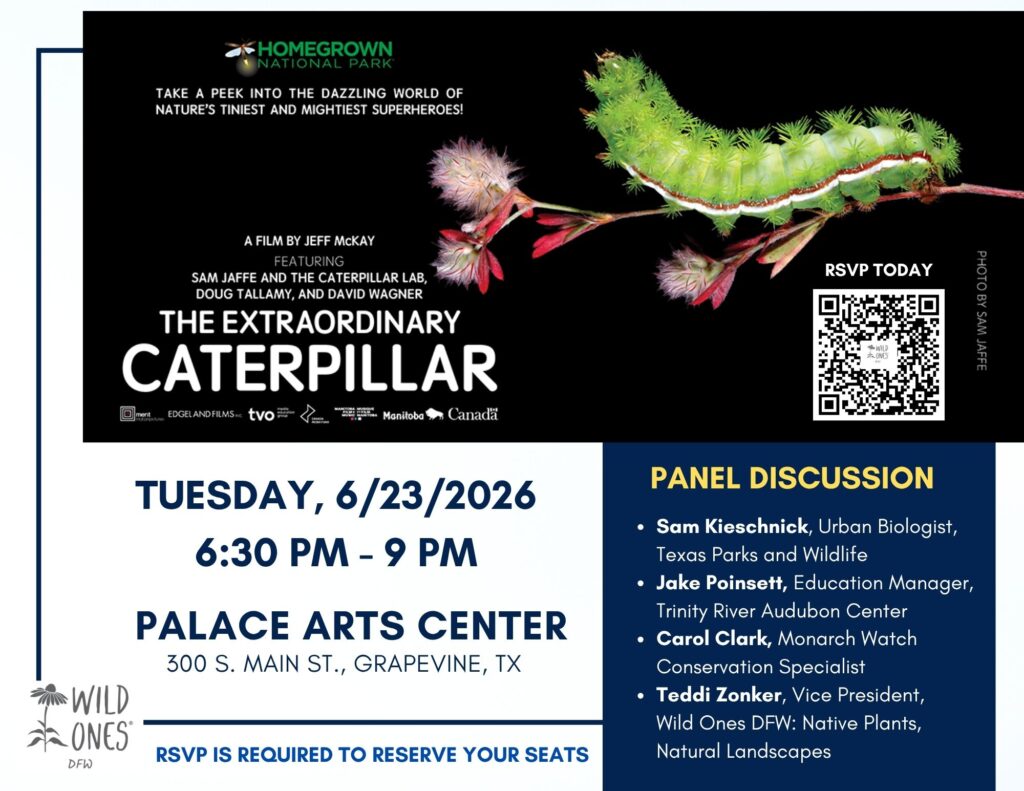
Join WILD ONES DFW’s for a special screening of The Extraordinary Caterpillar followed by a live panel with North Texas conservation experts on June 23—an inspiring evening of discovery, connection, and actionable insights you can’t get anywhere else. Click the event now to reserve your seat and be part of this unforgettable experience—RSVP is required, so register today before spots fill up!
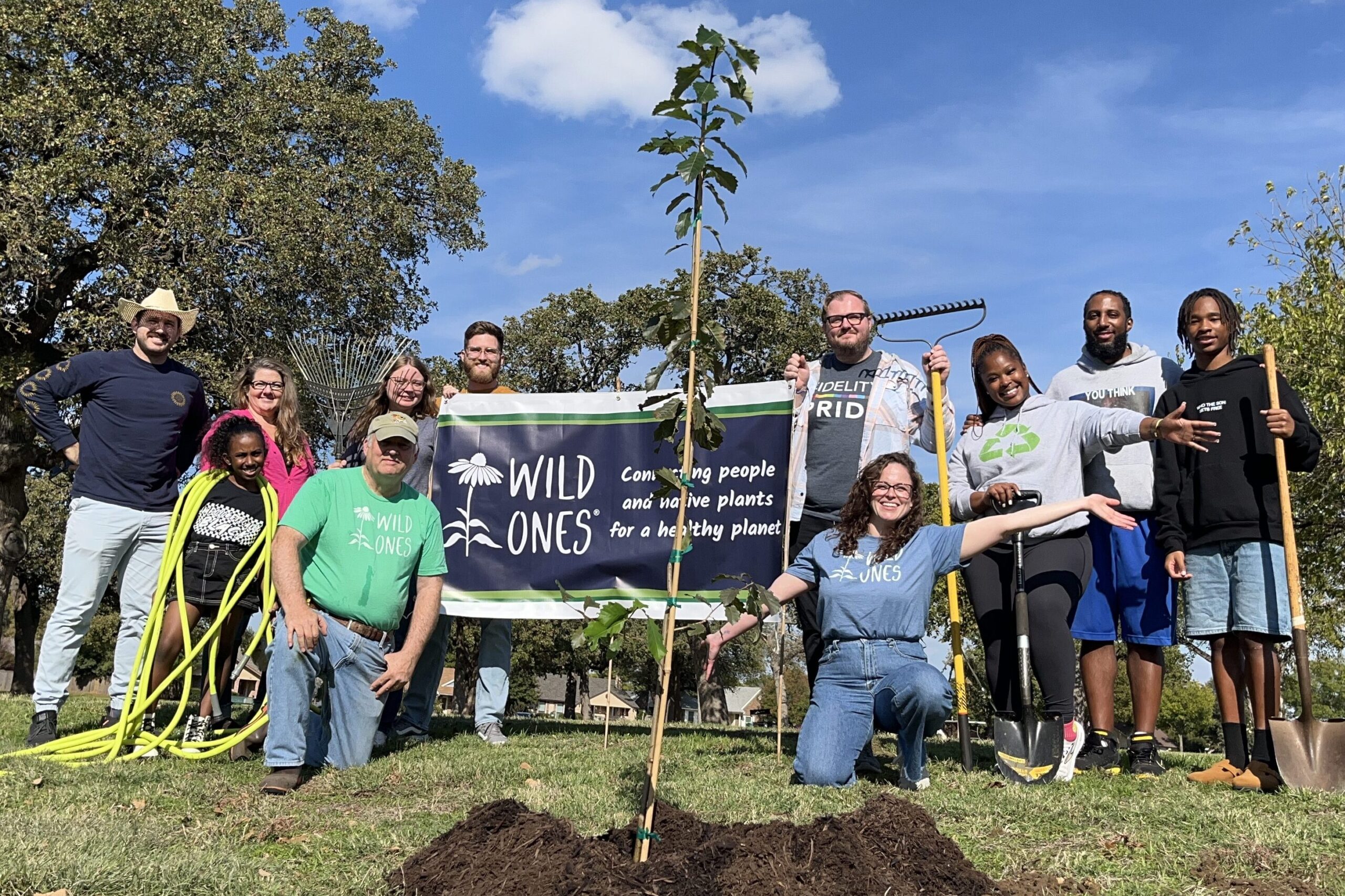
Wild Ones is national nonprofit organization that promotes native landscapes through education, advocacy and collaborative action.
As the only national not-for-profit educational organization with a mission to promote native landscapes through education, advocacy and collaborative action, Wild Ones serves as a resource for private individuals, schools, commercial property owners, and community decision makers as they move toward ethical choices in land use and in the redefinition of current guidelines and ordinances affecting our landscape. Because we are a “plants-roots” organization, our organizational goals are accomplished through local chapters and their individual members.
Wild Ones is a growing chapter, and we’d love your help as we continue to expand. Visit our 2026 Leadership Opportunities page to see how you can get involved and make a meaningful impact!
Why native plants?
Dwindling biodiversity is a threat to the foundation of life on earth. In the last century alone, we’ve lost millions of acres of diverse ecosystems. Native plants are resilient and adapted to regional soil and weather conditions help protect and restore biodiversity, improve air and water quality and provide wildlife with quality food and shelter. Our vision is to bring native plants and natural landscapes to every community.
Get started learning what plants are native to your area by checking your ecoregion below.
Ecoregions – Best for Selecting Native Plants
Selecting native plant species from within your geographic region (“ecoregion”) is the best way to incorporate natives in your garden or habitat landscape to help restore the natural environment. A native plant originating from its “home” ecoregion and range will grow best because over thousands of years, it has adapted to that region’s unique environmental conditions, such as climate, moisture, topography and soil. The same plant species may be found in several states and regions, but across its native range, species often have subtle differences in their genetic make-up (called “local genotype”). This environmentally sound landscaping practice helps to preserve biodiversity, the health of the environment and the unique character of where you live.
Ecoregions, mapped at four levels of detail, are nationally used by the U.S. EPA, the U.S. Forest Service and The Nature Conservancy. (See the U.S. EPA Ecoregions of North America, Level lll map on the back of this page.) The Wild Ones article “Guidelines for Selecting Native Plants” also provides more details.